Every nation has symbols that live deep in the heart of its people. For Armenia, that symbol is the Khachkar — the cross-stone.
When you stand in front of one, you don’t just see stone. You feel silence, prayer, memory, and resilience carved into every detail. I’ve seen khachkars on lonely mountain slopes, guarding old monasteries, and in bustling museums far from home. Wherever they are, they carry Armenia with them.
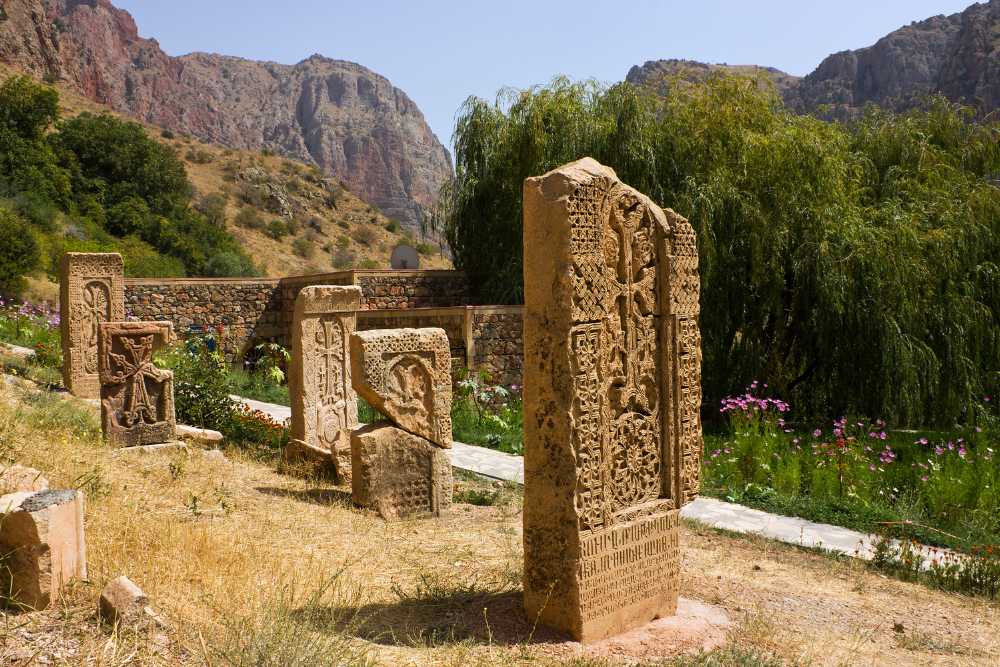
What is a Khachkar?
The word itself is simple: khach means cross, kar means stone. Yet what Armenians created from this simplicity is extraordinary.
Unlike crosses found in other Christian lands, Armenian khachkars became their own unique form of art — delicate lacework carved into volcanic stone, standing as both religious symbols and works of devotion. Since the 9th century, Armenians have been creating them in the same tradition, and to this day, master stone-carvers still continue the craft by hand.
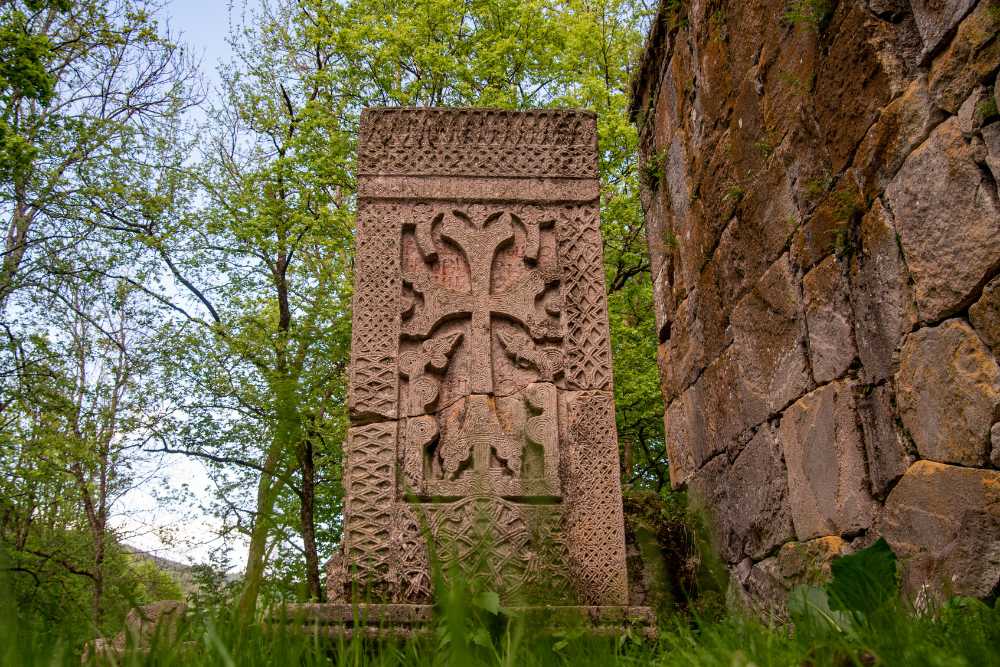
Why They Matter
Each khachkar is more than a monument. It is a story. Some were carved to honor a loved one, some to celebrate a victory, others to protect a village or to mark faith in God.
Look closely, and you’ll see crosses surrounded by rosettes, vines, or suns — symbols of eternity and life. Each curve and pattern whispers of hope, grief, triumph, and survival.
That’s why UNESCO recognized khachkars in 2010 as part of the Intangible Cultural Heritage of Humanity. They are not just Armenia’s treasures; they belong to the world.
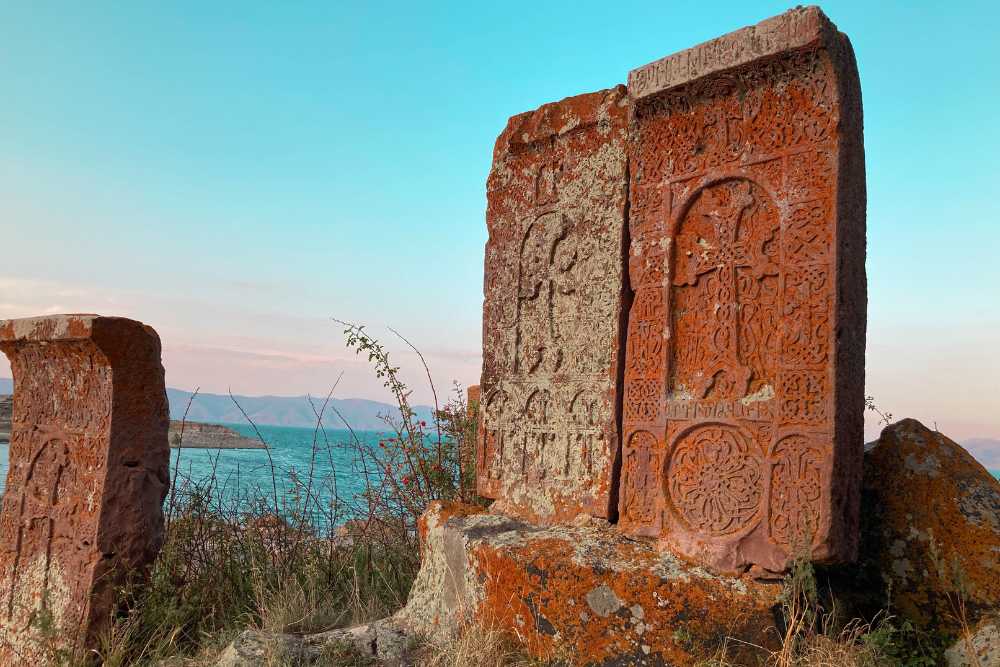
Quick Glimpse at Khachkars
- First created in the 9th century CE (the oldest known from 879 CE)
- Carved from volcanic tuff stone
- Found in over 60 countries, carried by the Armenian people
- Still made today, keeping an unbroken tradition alive
- Over 50,000 khachkars are known and documented